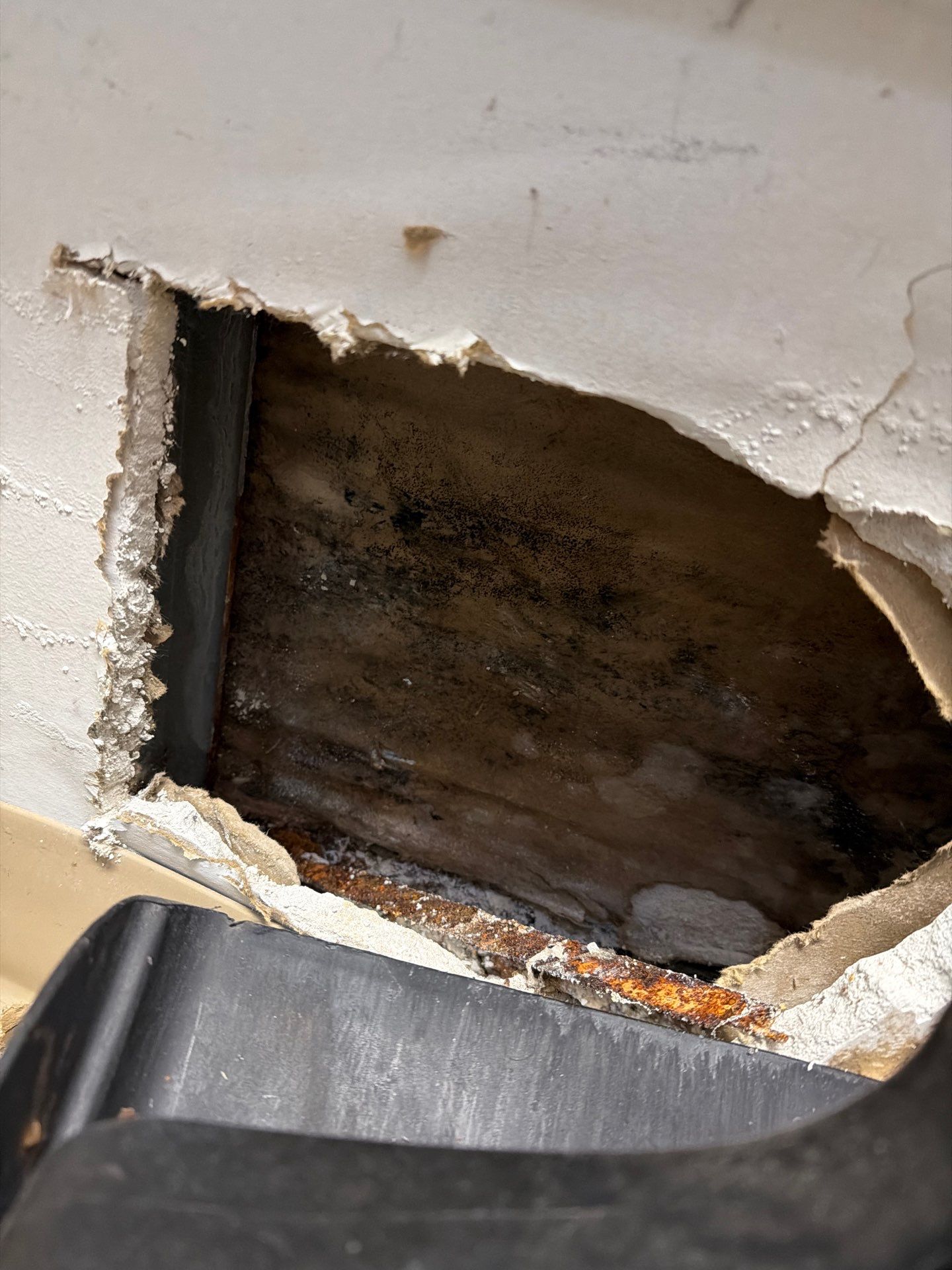
Pre remediation air testing is the diagnostic phase. Before a single containment barrier goes up or a single piece of drywall comes down, an independent indoor air quality professional collects samples from inside the affected area, from a comparable unaffected room, and from outdoors. The outdoor sample is the baseline because mold spores exist naturally everywhere, and any honest interpretation has to account for what is blowing through your neighborhood on the day of testing. The interior samples are then compared against that outdoor reference to determine whether elevated or unusual spore types are present indoors. If we find Stachybotrys, Chaetomium, or heavy concentrations of Aspergillus and Penicillium indoors that do not appear outside, that is a strong signal of an active indoor moisture problem.
The reason we recommend pre testing on most projects, even when visible growth is obvious, is that it creates a defensible starting point. Insurance adjusters respond to documented numbers, future buyers of your home in Bridgewater respond to documented numbers, and the remediation scope itself becomes more accurate when we know exactly what species we are dealing with. Some molds release more spores when disturbed, and knowing the profile in advance lets us choose containment strength, negative air machine sizing, and personal protective equipment intelligently. If the source of growth is unresolved water intrusion, the report often points us back upstream to a hidden plumbing issue or roof problem, which is why pre testing pairs so well with a thorough hidden water damage inspection in the same visit.
The actual sampling process is more involved than most homeowners realize. A typical air cassette pulls a fixed volume of air, usually 75 to 150 liters, through a sticky slide that captures spores for laboratory analysis under a microscope. The hygienist will often pull multiple samples per room, sometimes adding surface tape lifts or swab samples from visibly stained materials to confirm the species identification. Sample location matters too. Taking a reading directly under an HVAC return will read differently than one taken in a still corner, so a competent inspector documents exact positions, height off the floor, and conditions like whether windows were open or the system was running. When Bridgewater Water Restoration reviews a pre test report, we are looking at all of those variables, not just the raw spore counts, because context is what turns numbers into a remediation plan.
What Happens Between the Two Tests
The remediation work itself is where the actual cleanup occurs, and the quality of that work determines whether the post test will pass. Inside a sealed containment chamber under negative pressure, our technicians remove porous materials that cannot be salvaged, HEPA vacuum every surface, damp wipe with appropriate antimicrobials, and run air scrubbers continuously to capture airborne particulates. The water source that caused the growth has to be eliminated permanently, because no amount of cleaning matters if moisture is still feeding the colony. Mold grows fast under the right conditions, as we explain in our breakdown of how quickly mold develops after water damage, so the drying phase is just as critical as the demolition phase.
Between finishing the physical work and bringing the testing company back, we let the air settle for several hours with scrubbers still running. This settling period is part of the S520 standard and it gives an honest snapshot of what the air looks like in steady state, not what it looks like the second a worker stops sweeping. Skipping this step is one of the most common ways unscrupulous contractors fail a clearance test and then blame the lab.
Containment integrity is the other variable that quietly decides outcomes. A poly barrier with a slow leak will pull dust from adjoining rooms into the work zone during demolition and push spores out during cleaning, depending on how the negative air balance shifts throughout the day. Our crews check pressure differentials with a manometer at the start of each shift and again before testing is scheduled, and we tape every seam twice. When homeowners ask why we seem fussy about plastic sheeting, the answer is that the clearance result is downstream of every small detail in the setup. A crew that responds promptly when called, typically within 2 hours of your first phone call, and then takes the time to build containment correctly, is the crew that passes clearance the first time.
Post Remediation Verification and Clearance
Post remediation testing, sometimes called clearance testing or post verification, is the proof that the work succeeded. The same independent hygienist returns, ideally the one who did the pre testing so the methodology stays consistent, and collects new air samples from inside the work area while containment is still up. They also perform a visual inspection looking for dust, debris, and any remaining staining, because air numbers alone are not the whole picture. A passing clearance generally means three things: the work area looks visibly clean, the moisture readings in materials are back to normal dry standards, and the spore counts inside containment are equal to or lower than the outdoor baseline with no unusual indoor species present.
If the post test fails, that is actually useful information rather than a disaster. It tells us a pocket of contamination was missed, a containment leak occurred, or settling time was inadequate. Bridgewater Water Restoration re cleans at no additional charge when the failure is on us, because clearance is the deliverable we promised. We do not consider a job complete until the lab report says so in writing, and that report becomes part of your permanent home records. Buyers, lenders, and future insurers in Bridgewater routinely ask for clearance documentation, and having it on file protects the value of your property for years.
One question we get often is whether air testing is always necessary. Honestly, no. For very small isolated areas under ten square feet with a known clean water source, the S520 standard allows for remediation without formal sampling. We will walk through that decision with you during the free assessment, and if your situation falls into that category, we will say so plainly rather than upsell testing you do not need. For anything larger, anything involving Category 3 water like sewage, or any situation where occupants have respiratory sensitivities, third party testing on both ends is worth every dollar. If your mold problem traces back to a sewage event, our sewage cleanup protocols are built around that exact risk profile.
The bottom line is that pre and post testing are bookends on the same story. The first chapter tells you what you are dealing with and why, and the last chapter proves the problem is gone. Anything in between that skips either bookend leaves you guessing, and guessing is exactly what you do not want when the question is whether the air your family breathes in Bridgewater is safe.