Problem: Water Is Spreading Faster Than You Can Contain It
Within the first hour of a leak, water has already moved through carpet pad, under cabinets, behind baseboards, and into the wall cavity. Most homeowners try to mop, towel, or shop vac the surface, but the visible water is usually 20 to 30 percent of what is actually in the structure. Drywall wicks moisture upward at roughly an inch per hour. Subfloor and joists hold it for days. By the time you see staining on a ceiling below, the cavity above has been saturated for a while.
Solution: Stop the Source, Then Call a 24 Hour Team
Two things have to happen at once. First, kill the water at its source. Shut your main supply valve (usually near the water meter, the front hose bib, or the utility room in Bridgewater homes). If it is a roof or storm event, get tarps or buckets in place. Second, call an emergency crew that can be on site quickly. A Bridgewater Water Restoration technician in Bridgewater typically arrives within 60 to 90 minutes, brings truck mount extraction, and starts pulling water before it reaches the next room. You can read more about the equipment and process on our water damage restoration service page.
Problem: You Do Not Know What Category of Water You Are Dealing With
IICRC defines three categories. Category 1 is clean water from a supply line or fixture. Category 2 is gray water with some contamination, like a washing machine discharge or a sump failure. Category 3 is black water, which includes sewage, river flooding, or any water that has sat long enough to grow bacteria. The category dictates what can be saved, what has to be removed, and what PPE the crew needs.
Solution: Let a Certified Tech Make the Call
Guessing wrong is expensive. Treating a Cat 3 like a Cat 1 means you keep contaminated materials in the home. Treating a Cat 1 like a Cat 3 means you tear out drywall that could have been dried in place. A certified technician moisture maps the affected area, identifies the source, and documents the category in writing. If you suspect sewage, do not walk through it. Our sewage cleanup team in Bridgewater handles Cat 3 work with the right containment and disinfection protocols. Keep in mind that a Cat 1 loss can degrade to a Cat 2 within 48 hours, and a Cat 2 can become a Cat 3 within another 48 hours if it sits. Time of exposure matters as much as the original source, which is one more reason a same night response saves you money on the back end.
Problem: Mold Is Already a Concern
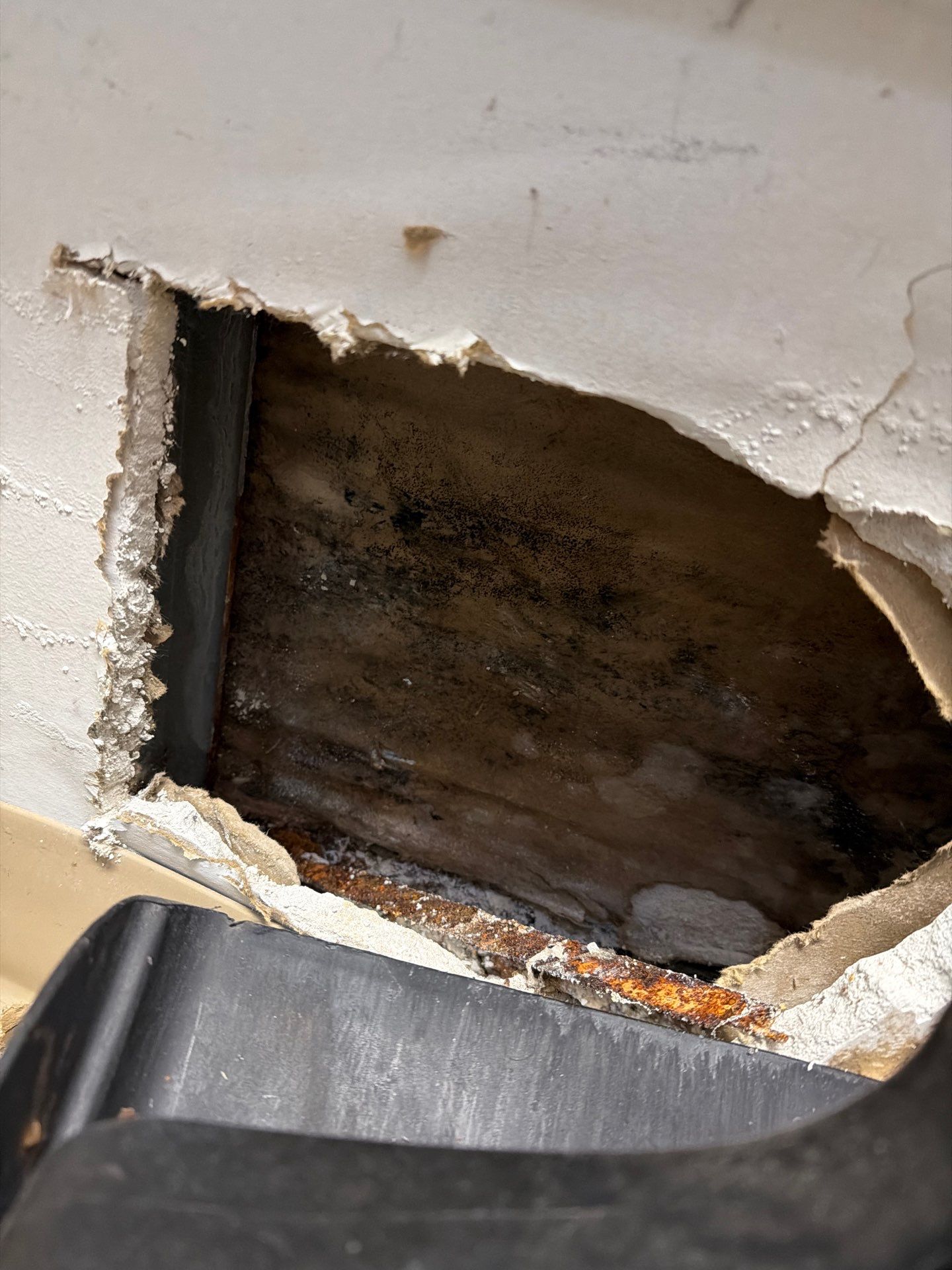
Mold can start colonizing wet materials in 24 to 48 hours. If a leak has been running for a day or two before discovery, you are already in that window. Drywall, carpet pad, and the back side of cabinets are the usual first growth sites.
Solution: Aggressive Drying, Targeted Removal, Verified Results
- Remove unsalvageable porous materials within the first 24 hours.
- Run commercial air movers and dehumidifiers until moisture content matches unaffected materials.
- Verify dryness with meter readings, not guesswork, before any rebuild begins.
If growth is already visible, we treat it as a remediation job, not a drying job, and we will tell you that on the first walk through.
Problem: You Are Worried About Filing With Insurance
Homeowners hesitate to call at midnight because they are not sure what their policy covers, whether they should call the insurance company first, or whether using a restoration company will affect their claim. Meanwhile the water keeps moving.
Solution: Document First, Call Both in Parallel
Take photos of every wet surface, the source, and any damaged contents before anything is moved. Most policies in Bridgewater cover sudden and accidental discharge, and most adjusters expect you to mitigate immediately to prevent further damage. That is your responsibility under the policy. Bridgewater Water Restoration writes Xactimate estimates, communicates directly with your adjuster, and provides moisture readings and drying logs that insurers recognize. You can call us and your carrier in either order. We will not pressure you into work that is not covered. Save receipts for any emergency supplies you purchase, keep a simple log of who you spoke with and when, and hold onto damaged contents in a garage or shed until the adjuster has had a chance to inspect them.
Problem: You Are Not Sure What to Do in the First Ten Minutes
Most Bridgewater homeowners freeze when water is actively running. The clock is ticking, but panic makes the next move harder, not easier.
Solution: A Short Checklist You Can Run From Memory
Shut the main water valve. Cut power to any affected room at the breaker if outlets or fixtures are wet. Move electronics, rugs, and small furniture to a dry area. Pull up loose items off the floor. Take photos. Then call Bridgewater Water Restoration. That sequence takes about ten minutes and protects both your safety and your claim while the crew is en route.
Problem: Your Basement Is Filling and the Storm Is Not Over
Basement flooding in Bridgewater usually comes from one of four sources: a failed sump pump, a clogged exterior drain, hydrostatic pressure through a foundation crack, or a sewer line backup during heavy rain. Each one needs a different fix, and each one keeps producing water until it is addressed.
Solution: Extract, Diagnose, and Block the Re-entry Point
- Extract standing water with submersible pumps and truck mount units, even while light flow continues.
- Identify the entry point. A crew should be able to tell you within 30 minutes whether you have a pump issue, a drain issue, or a sewer issue.
- Set containment and start drying only after the source is controlled.
If you want a deeper walk through of the process, we wrote it up in our basement flooding guide. One detail worth flagging: if your power is out and your sump is dead, a generator powered backup pump is often the difference between two inches and two feet of water. Crews carry these on the truck and can stage one in under an hour while the rest of the team starts extraction upstairs.