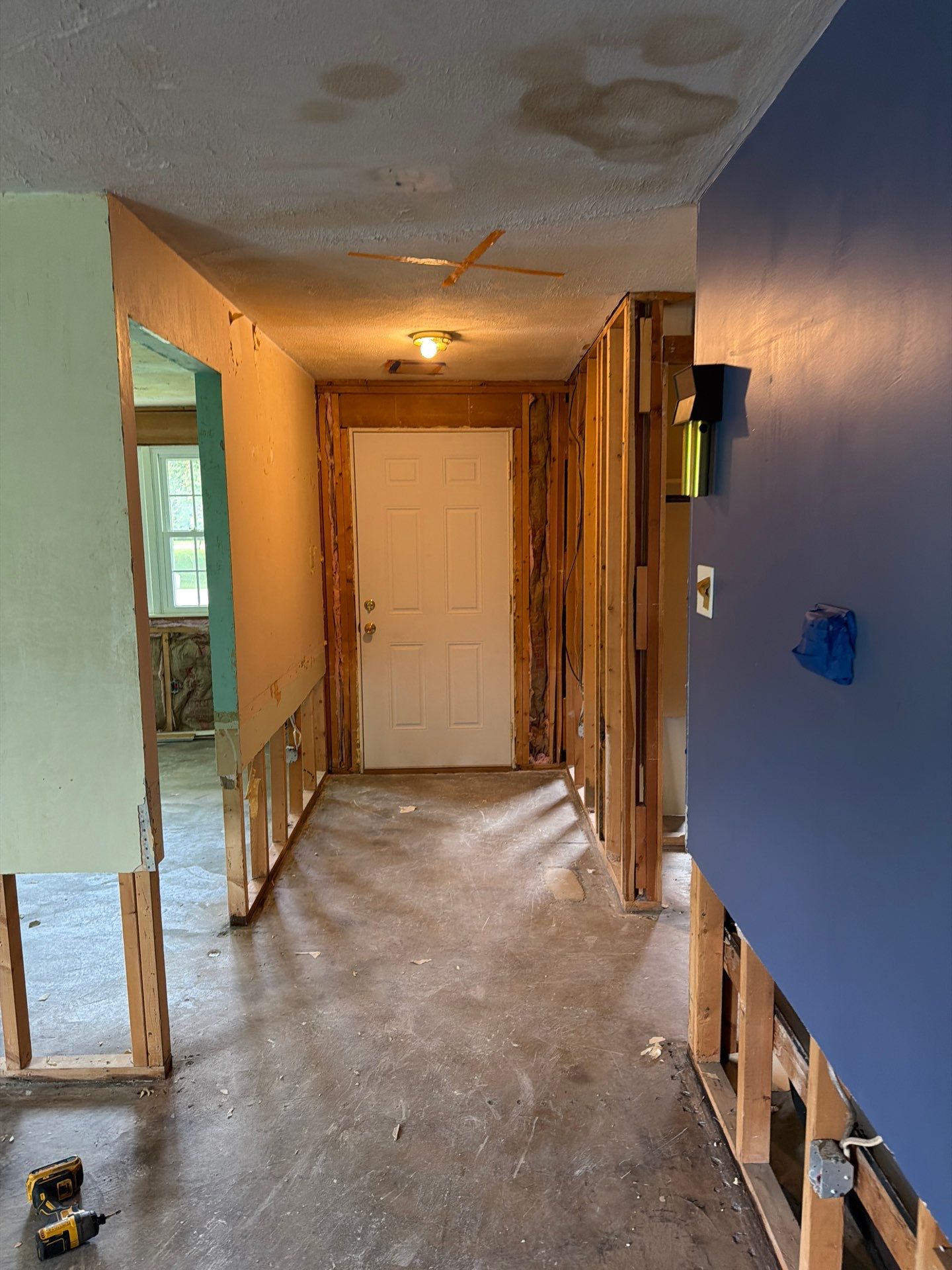
The Westside Burst Pipe That Taught Us What Reviews Miss
A homeowner over on the west side of Bridgewater called us last February after a frozen pipe let go in a wall above her laundry room. She had already called two companies. The first quoted her a flat $8,500 before anyone looked at the property. The second said they could be there "sometime tomorrow afternoon." She found Bridgewater Water Restoration through a five-star review that mentioned, specifically, that the tech explained the drying plan in plain English. That detail, not the star count, was what made her dial.
When we arrived ninety minutes later, the moisture map told a different story than her panic suggested. The water had traveled through the top plate of the wall and saturated about 180 square feet of subfloor in the adjacent room. The final invoice came in at $4,720, fully documented for her insurance carrier. That job is a useful benchmark because it sits squarely in the middle of what most clean-water Category 1 losses run in Bridgewater: somewhere between $3,500 and $7,500 once you factor in extraction, structural drying, and antimicrobial treatment.
Reading Reviews Like Someone Who Has Read 4,000 of Them
Star ratings are a starting point, not an answer. When you scan Bridgewater water damage companies on Google, look for three patterns in the written reviews themselves.
- Reviews that mention specific equipment (air movers, dehumidifiers, moisture meters) and specific timelines ("dry in four days") tend to come from real jobs, not staged feedback.
- Reviews that praise the office staff and the technicians by name suggest a company small enough to actually know its people.
- Negative reviews answered with calm, specific responses tell you more than the glowing ones. Defensive responses are a red flag.
One Bridgewater landlord told us he eliminated two companies from his shortlist because every five-star review used the same three adjectives. He was right to be suspicious. Pattern language across reviews usually means the reviews were solicited with a script, or worse.
We also tell Bridgewater homeowners to look past Google and check the Better Business Bureau, the state contractor licensing board, and the IICRC certification registry. A company that lists "IICRC certified" on its website but does not show up in the public registry is bluffing. One Bridgewater couple caught exactly that during their vetting process and crossed the company off before the truck ever rolled.
What an Honest Walkthrough Looks Like
One Bridgewater homeowner recently told us our initial visit felt more like a home inspection than a sales call. That was the point. A technician who skips the moisture meter, eyeballs the damage, and quotes a flat number in under ten minutes is guessing. A technician who measures relative humidity, checks wall cavities, photographs every affected surface, and writes the scope on a tablet in front of you is giving you a document you can hand to your adjuster. The difference shows up later, when the claim either pays cleanly or stalls in dispute for six weeks.
The Basement Job That Doubled in Price (And Why)
A retired couple in a 1960s ranch on the north side of Bridgewater had a sump pump fail during a March rainstorm. They called a national chain first. The technician quoted $6,200 for extraction and drying. They called us for a second opinion because something felt off. When our crew opened the wall cavity behind the finished basement bar, we found black staining that had been growing for at least a year, likely from a slow foundation seep the sump had been masking. The job grew. Final cost was $11,400, and roughly $3,800 of that was mold remediation that the first company had not even mentioned.
The lesson is not that basements are expensive, although they can be. The lesson is that the cheapest quote in a sump pump failure scenario is often the one that ignores what is behind the drywall. A good restoration company in Bridgewater will pull baseboard, take moisture readings inside wall cavities, and tell you about the mold risk before you sign anything.
What Bridgewater Jobs Actually Cost in 2024 and 2025
We pulled a rough average from the last 200 residential jobs we completed in and around Bridgewater. A small kitchen leak from a dishwasher supply line, caught within twenty four hours, typically lands between $1,800 and $3,200. A burst pipe affecting two rooms and a hallway sits between $4,500 and $8,000. A finished basement with two to three inches of standing water generally runs $7,000 to $14,000, depending on flooring type and whether the water was clean or contaminated. A Category 3 sewage backup almost always exceeds $10,000 once you include disposal, sanitization, and rebuild.
Insurance covers most of these losses when the cause is sudden and accidental. It does not cover long-term seepage, neglected maintenance, or groundwater intrusion without a specific endorsement. We had one Bridgewater homeowner discover this the hard way when his slow shower pan leak, which he had ignored for eight months, was denied entirely. The repair was real. The coverage was not.
The Commercial Call That Came in at 4 AM
A property manager for a small office building near downtown Bridgewater called us at 4:12 in the morning after a rooftop HVAC line let go and pushed water down through two floors of suspended ceiling. The carpet was soaked across roughly 3,200 square feet. The biggest issue was not the water. It was that the tenants needed to be operational by Monday. We staged sixty air movers and twelve commercial dehumidifiers, ran continuous monitoring for four days, and the building reopened on schedule. That job ran just under $38,000, all of which fell under the building's policy. Commercial losses move on a different clock and a different budget than residential, and any restoration company you call should be honest about whether they have the equipment depth to handle yours.
How Bridgewater Water Restoration Quotes a Job
We come to your property. We use moisture meters and thermal imaging. We document what we find, we explain the drying plan, and we put it in writing before the first piece of equipment turns on. If your job is genuinely small enough to handle yourself, we will tell you. If it is bigger than what you assumed, we will show you the readings that prove it. That is the same approach whether you are calling about a leaking water heater in a Bridgewater bungalow or a flooded warehouse off the interstate.