Commercial Water Restoration in Bridgewater, IN
Drop ceilings and carpet tile in Bridgewater buildings dried in place wherever the readings allow.
For Commercial Water Restoration in Bridgewater, Bridgewater Water Restoration brings the equipment, the certifications, and the paperwork: 24/7 response, written scopes, and insurance claim support. Call (317) 342-7736 for dispatch.
- Service: Commercial Water Restoration for Bridgewater homeowners
- Service area: Bridgewater, IN and surrounding areas
- Response time: Emergency calls from Bridgewater dispatched immediately, day or night
- Licensed and insured (License #RC21100059)
- Serving Bridgewater, IN since 2018
Commercial Water Restoration for Bridgewater Businesses
Water on a warehouse slab spreads farther than it looks, because the floor is flat by design and the square footage is large. It runs under racking, beneath pallets, and into the joint where the slab meets the dock wall. Bridgewater Water Restoration brings desiccant drying and the air mover count that real square footage requires to commercial losses in Bridgewater, with a crew dispatched within 2 hours of the call.
Finding where the water went decides the whole scope. Bridgewater Water Restoration crews map with thermal imaging, moisture meters and small inspection holes, then record readings by location so the next day's numbers mean something. On a loss that crossed floors in your Bridgewater building, that mapping is usually what finds the areas nobody had reported wet yet.
Scheduling gets built around your operations. Crews run loud work overnight or on a weekend, break the floor into zones, and move equipment through a freight lift on the hours your building allows. Daily readings still happen on a 24 hour cycle whenever the heavy work runs. Bridgewater Water Restoration confirms the schedule with building engineering and your management office before a crew shows up on site.
Maintenance records help a claim as much as photographs do. Pull the work orders and service logs for the system that failed, such as the roof drain or the condensate line, along with any alarm or building automation history from the day of the loss. Bridgewater Water Restoration adds the moisture file for your Bridgewater property to those records.
Your building engineer knows the isolation valves, so ask that person to meet the crew at the door. Bridgewater Water Restoration walks the loss with your engineer and builds the plan for your Bridgewater property around the valves and panels marked on the sketch.
Signs You Need Commercial Water Restoration
If you notice any of these in your Bridgewater building, schedule a free inspection before the issue worsens.
A shutoff valve or supply line weeping behind an access panel in a janitor closet
Carpet tile edges curling or lifting where the adhesive underneath has released
Ceiling tiles on the break room floor Monday morning with wet carpet tile beneath them
Ice building up on a walk in cooler floor where water collected and refroze
Chilled water pipe insulation dripping onto the ceiling tiles below it
Water running down stairwell treads or collecting on a landing below an upper floor
The boiler or water heater room floor wet with no source anybody can point to
Drips from a ceiling mounted fan coil unit or a variable air volume box
Water bills for the property climbing with no change in occupancy or use
Hot water heating pipe leaking inside a classroom unit ventilator cabinet
How Bridgewater Water Restoration Handles Commercial Water Restoration
We follow these steps in order on every Bridgewater job.
Moisture Mapping
Every affected area gets read with thermal imaging and both noninvasive and penetrating meters, floor by floor where water moved vertically. The crew photographs the source, and the readings set how much drying equipment each area needs.
Containment and Zone Planning
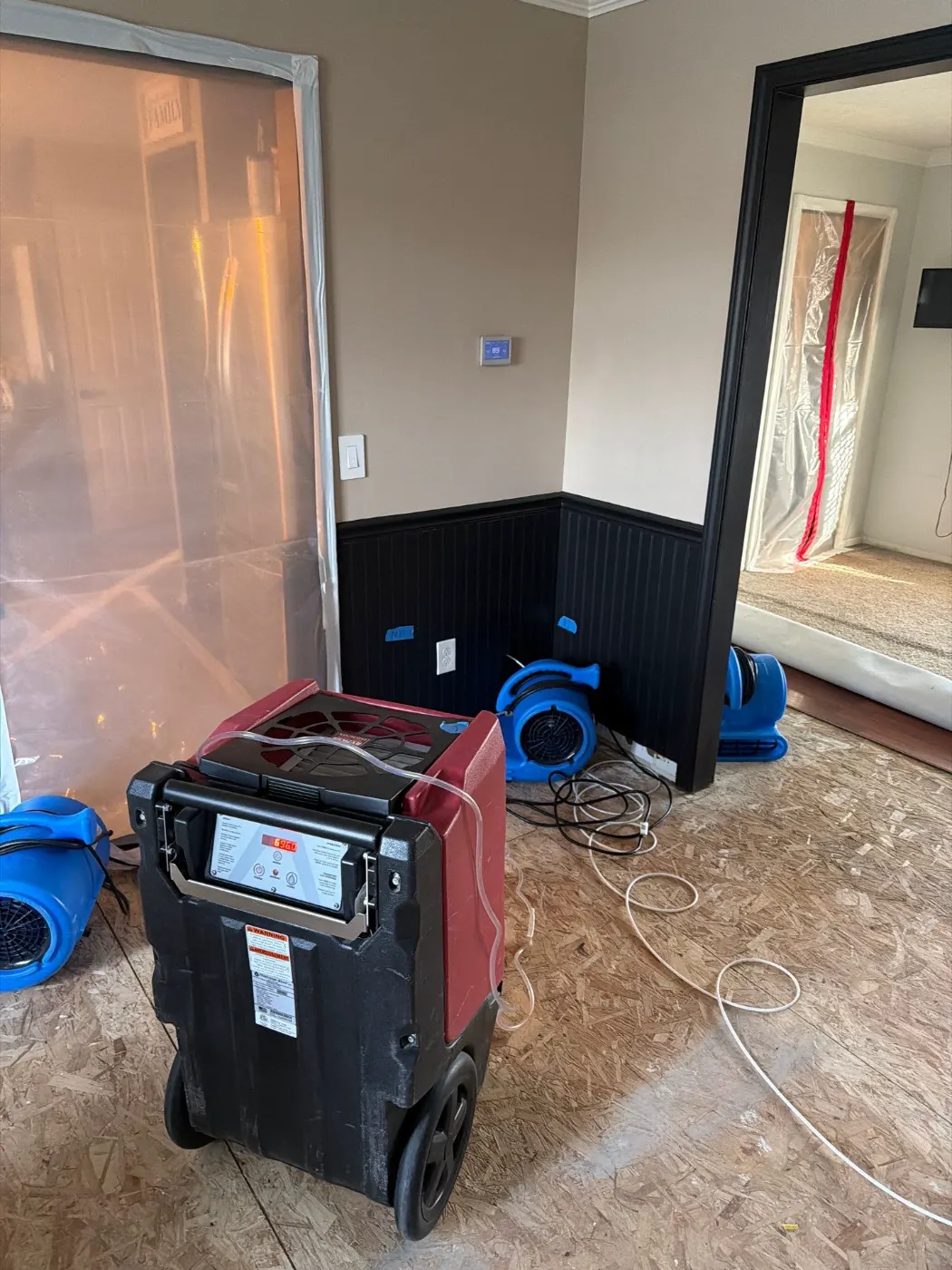
Affected areas get polyed off and put under negative pressure where the water category calls for it, with corridors and egress kept clear. Zone boundaries get drawn with your management office so unaffected tenants keep working.
Selective Removal
Material comes out of your Bridgewater building where the meters and the water category support it, and stays where it can dry in place. Each cut is photographed and logged by location, and the list is reviewed with you in writing.
Structural Drying Design
Dehumidification gets sized from affected cubic footage and material porosity, with dry air ducted into ceiling plenums, wall cavities and shafts. Air movers get placed to keep surface air moving, and the calculation gets revised as readings change.
Equipment Placement and Circuits
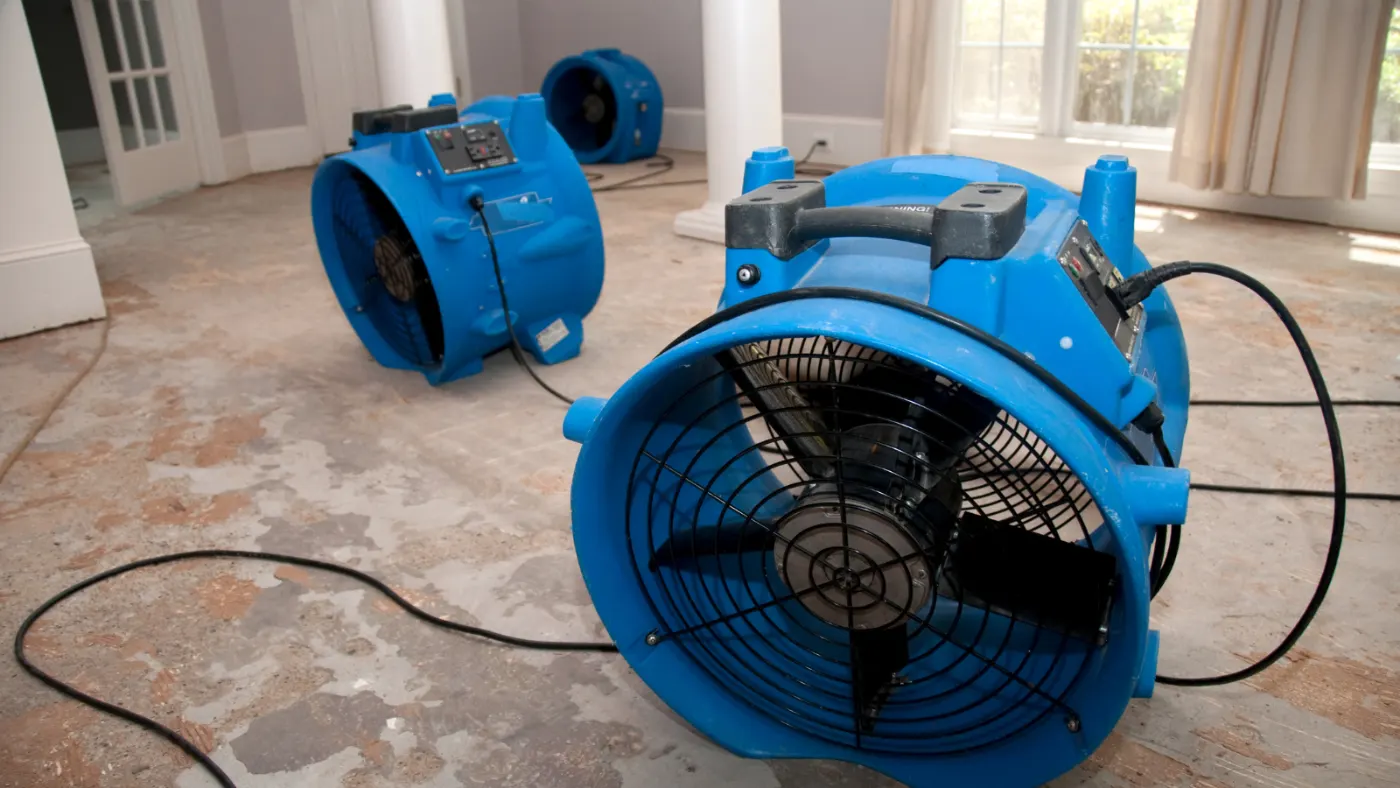
Air movers and dehumidifiers go where the drying calculation puts them, with ducting routed into plenums and shafts. The crew confirms what each circuit can carry and routes cords overhead or along walls to keep exits clear.
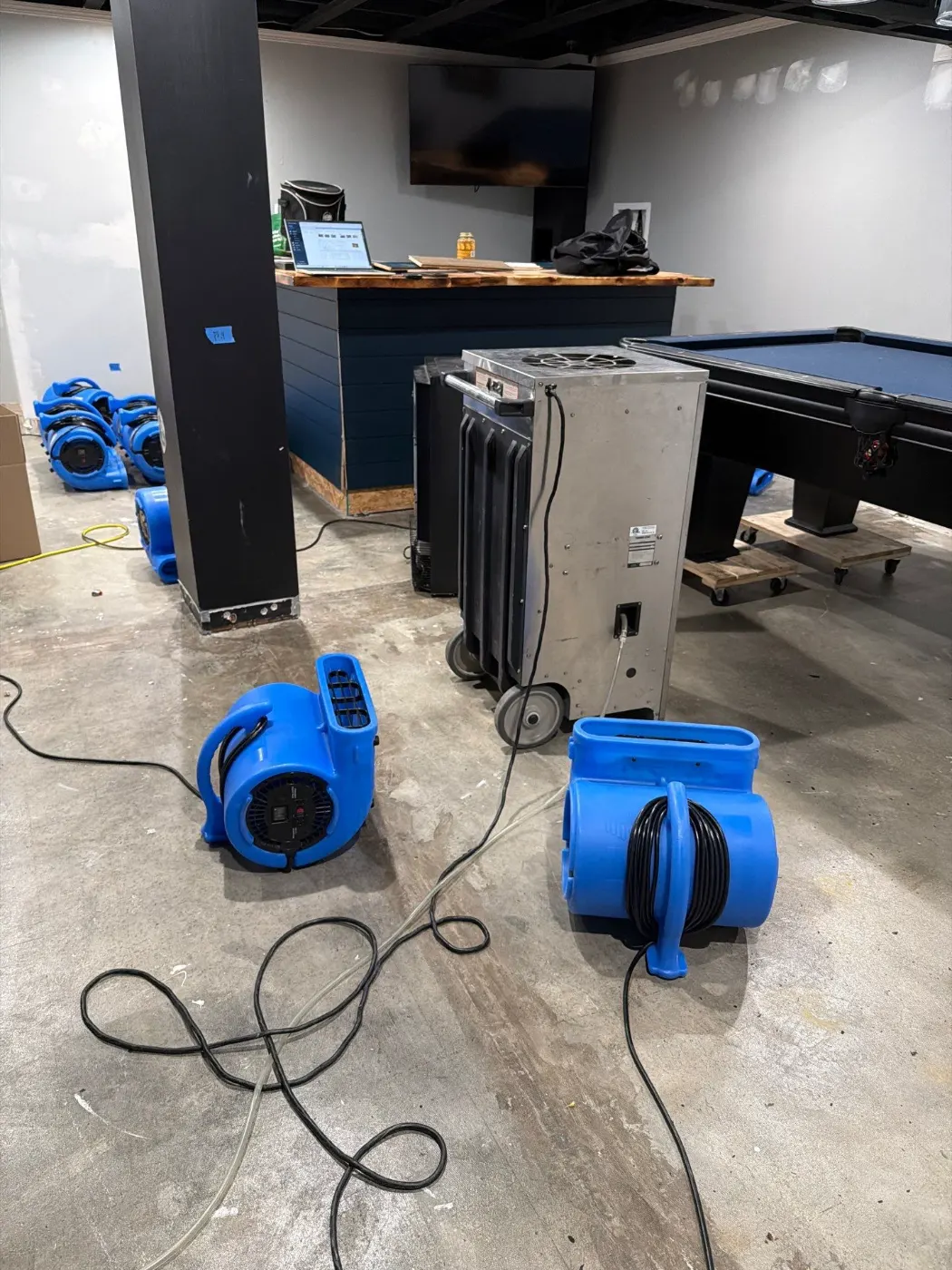
Commercial Water Restoration in Bridgewater
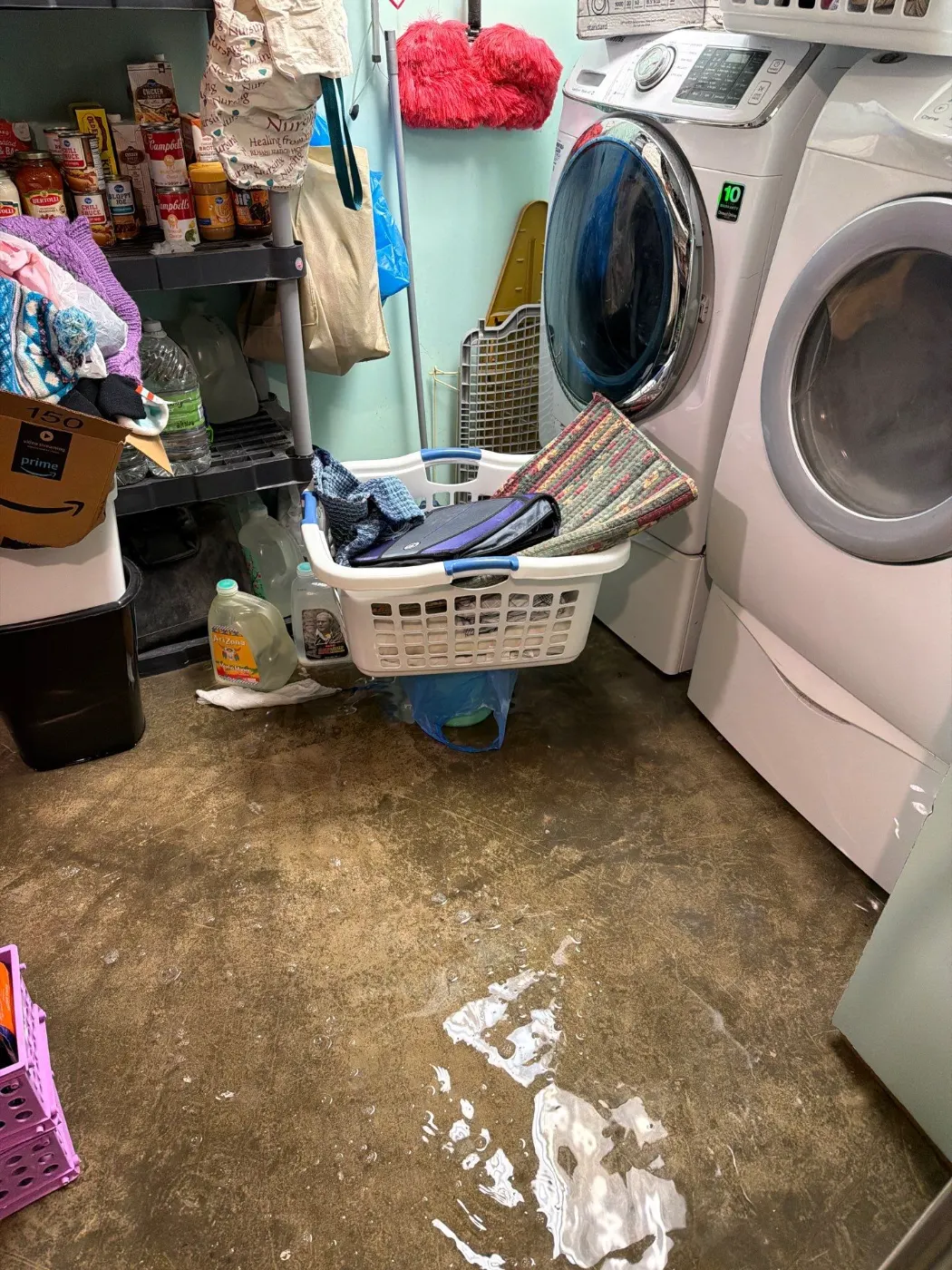
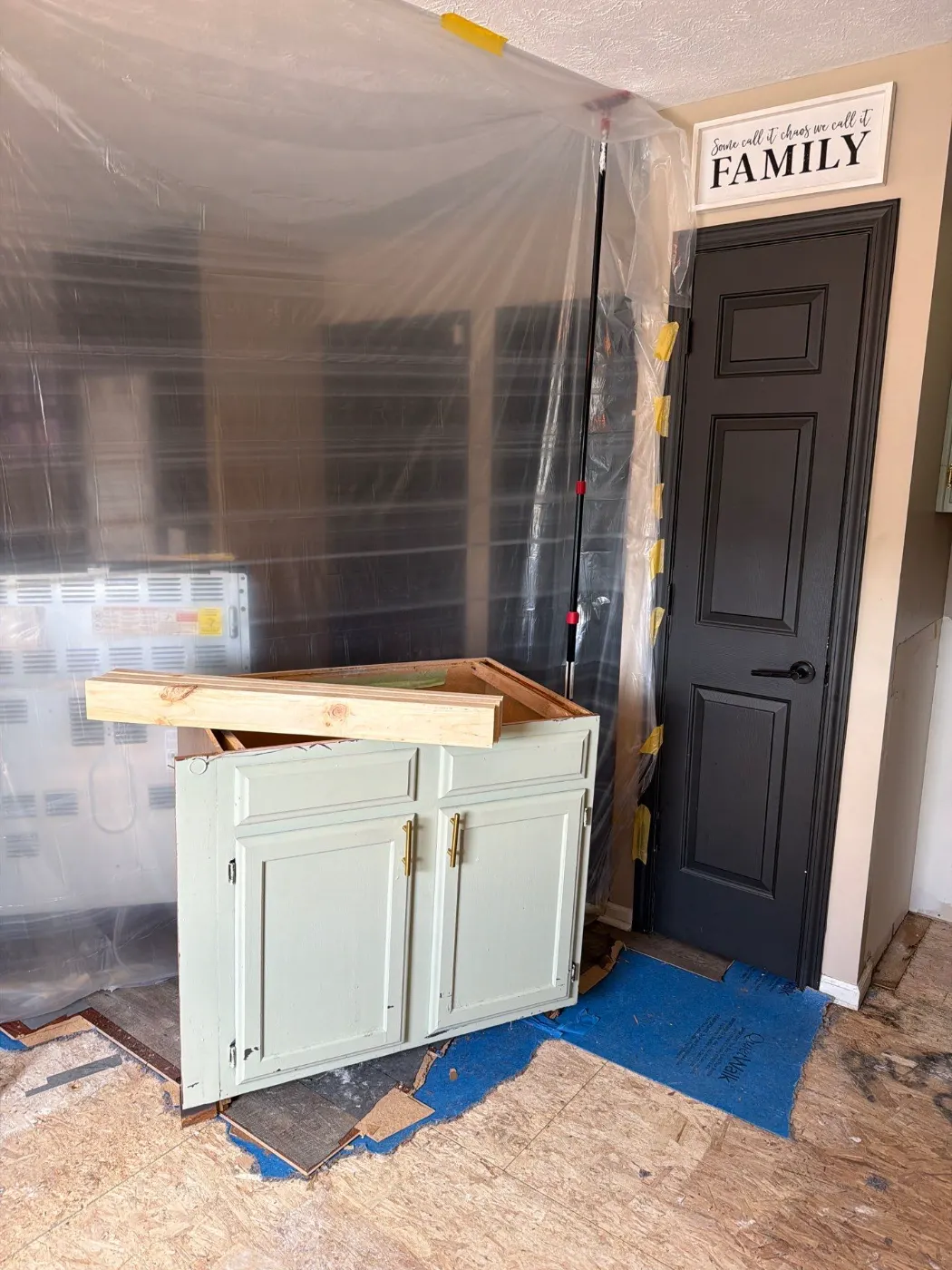
Photographs from real commercial water restoration jobs completed by our crew in Bridgewater and surrounding areas.
Commercial Water Restoration FAQ
Questions Bridgewater property managers ask us about commercial water restoration.
Guidance and Standards for Commercial Water Restoration
- The ANSI/IICRC S500 is the published standard for professional water damage restoration. The current edition is the Fifth Edition, 2021. IICRC S500 Standard
- EPA advises drying water damaged areas and items within 24 to 48 hours to prevent mold growth. EPA: A Brief Guide to Mold, Moisture and Your Home
Other Restoration Services in Bridgewater
Bridgewater Water Restoration handles the full scope of restoration work. Explore our other services below.
Water Damage Restoration in Bridgewater
24/7 emergency response. IICRC certified water restoration from extraction to full dry out.
Learn more →Basement Flooding in Bridgewater
Basement water emergencies handled fast. Extraction, drying, mold prevention.
Learn more →Sewage Cleanup in Bridgewater
Category 3 biohazard cleanup. Full containment, decontamination, structural restoration.
Learn more →Request Commercial Water Restoration
Reach Us Directly
Our team is available 24/7 for emergencies and ready to schedule inspections during business hours.
Need Immediate Help?
For active water or mold emergencies, call us directly. We are available 24/7.